Building a “Sky of Social”: Inside the Creator-Led Media Economy

The media landscape is being rebuilt around platforms, algorithms, and creators. Alistair Gosling and Ben Brown, co-founders of Wavelength Network, are building a business designed for that reality bringing together publishing channels, creators, and brands into a new kind of media network spanning sports, gaming, automotive, and youth culture. Rather than creating a new platform, Wavelength operates across existing ones, focusing on owned distribution, audience scale, and commercial partnerships to build what they describe as a “Sky of social.”

In this episode, they explore how media consumption has shifted toward feed-driven, “lean back” experiences, why creators are increasingly the source of new formats and intellectual property, and how Wavelength helps talent move beyond fragmented revenue into longer-term value. They also discuss the future of the industry — from micro-format content and new platforms to physical creator hubs and live experiences — and why the next generation of media will be shaped less by institutions and more by individuals building their own platforms in real time.

Supported by Norman Broadbent: https://www.normanbroadbent.com/

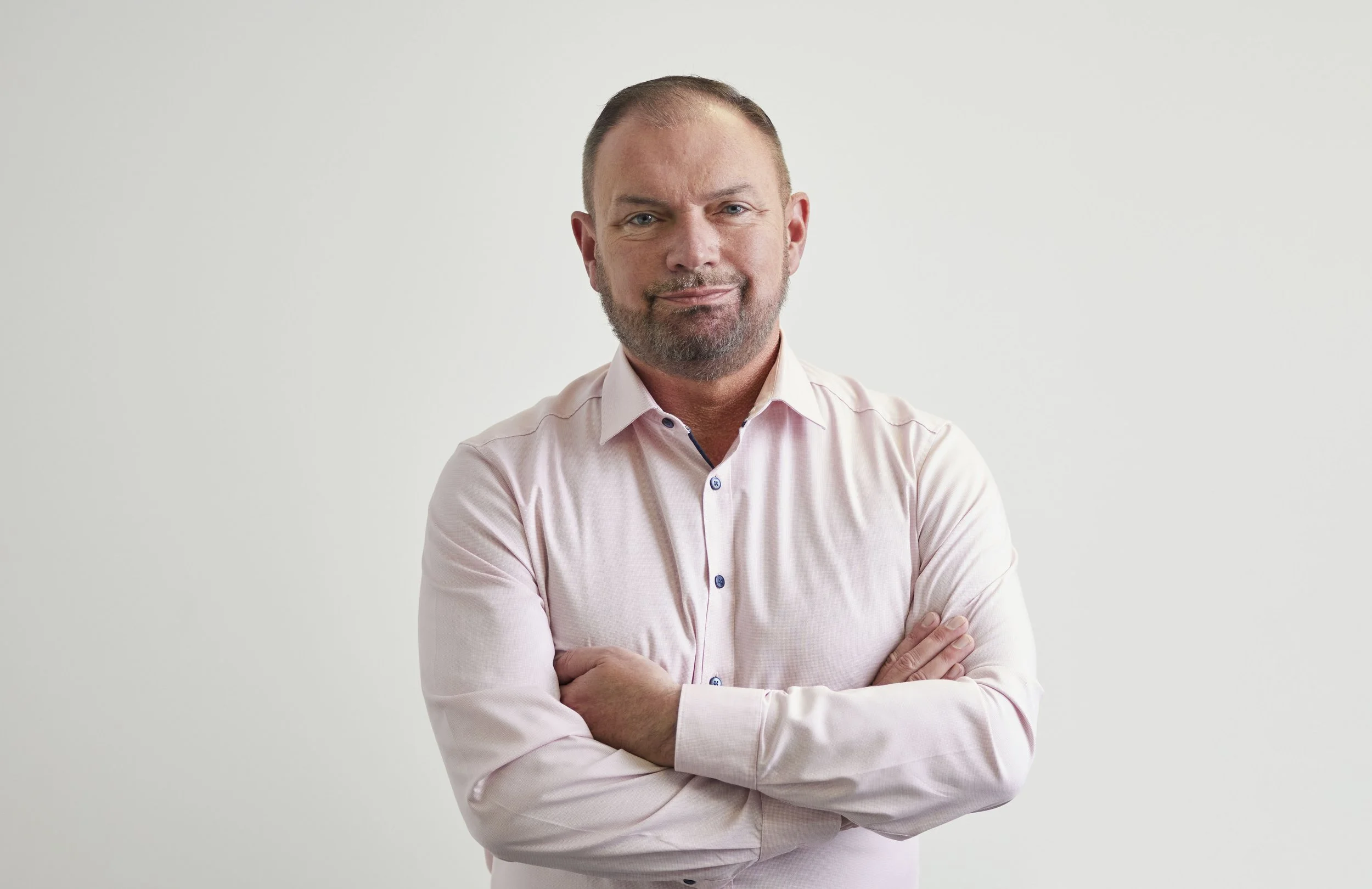
Ben Brown and Alistair Gosling

Building a Specialist Firm

How do you build one of the UK’s largest personal injury firms in a market many still dismiss or misunderstand? James Maxey, Founder and CEO of Express Solicitors, shares how he grew the business from a one-man practice with 22 clients into a national specialist firm with 900+ employees, around 45,000 live claims, and a model built around scale, quality, and disciplined execution.

James reflects on why he chose to build a firm rather than follow a traditional legal career path, and how Express developed a strategy centred on doing as much of the client journey as possible in-house. He explains why that model has helped the firm maintain quality, move faster, and respond more effectively to regulatory change, while continuing to serve claimants across the full spectrum of injury cases.

Looking ahead, he discusses succession planning, the decision to bring in private equity, and the next phase of growth for the business. He also shares why training has been such a critical part of Express’s success, how the firm thinks about service and pricing in a complex legal market, and why he still believes that for anyone thinking about building a business, the best advice is simple: do it.

Supported by Norman Broadbent: https://www.normanbroadbent.com/

James Maxey

Opportunistic and Optimistic

How do you build a global financial services firm in a part of the economy most people don’t even know exists? Mia Drennan, Founder and CEO of GLAS, shares how she scaled an independent loan agency business from just £6,000 into a global platform administering hundreds of billions in assets—by stepping into a function that once sat quietly inside banks and turning it into a standalone, high-value service built on execution where the market was falling short.

Mia reflects on GLAS’s origins in the aftermath of the 2008 financial crisis, when broken loans, shifting lender dynamics, and operational gaps created a rare opening for a new kind of intermediary. What began as a scrappy, entrepreneurial response to complex restructuring situations evolved into a global business spanning private credit, banks, and capital markets. She shares how an opportunistic mindset, enabled the firm to grow from early high-stakes mandates into an internationally scaled platform, offering a candid look at how the strategy took shape in practice.

Looking ahead, she discusses GLAS’s shift toward a technology-enabled model, the role of AI in transforming back-office functions, and why trust, culture, and human judgment remain central as the business continues to scale.

Supported by Norman Broadbent: https://www.normanbroadbent.com/

Mia Drennan

Running Lean, Thinking Long-Term

How do you build a profitable business in one of the UK’s toughest sectors while delivering real social impact? Max Dubiel, co-founder of Redemption Roasters, shares how the company is navigating growth, pressure, and purpose in real time.

Since we last spoke, Redemption has raised capital, expanded its footprint, and then faced a far more challenging hospitality market. What followed was a rapid reset — restructuring the business, tightening cost control, and rebuilding for resilience.

In this episode, Max offers a candid look at leading through uncertainty, from tough operational decisions to redefining success in a volatile market. He shares why operational cost discipline can be a strategic advantage, how structured management practices shape culture, and why long-term impact requires both patience and pragmatism. It’s a grounded conversation about building a business that lasts commercially and socially.

Supported by Norman Broadbent:  https://www.normanbroadbent.com/

Denise Massey

Trust, Strategy, Growth

How do you lead a global professional services network in an increasingly uncertain world? Francesca Lagerberg, CEO of Baker Tilly International, shares how the network of independent member firms—made up of over 50,000 professionals—comes together to deliver advisory, audit, legal and tax services to mid-market clients across 140 territories.

But Baker Tilly’s story is not simply about scale. Francesca explains why the network’s purpose centres on helping clients make considered decisions, both for now and tomorrow, and how trust underpins a model built on collaboration rather than hierarchy.

In this episode, Francesca reflects on stepping into the CEO role during a period of major change in the accounting profession. She talks about developing a new global strategy over an 18-month period, bringing together stakeholders across the network. From evolving client expectations to technology enabling professionals to focus on higher-value work, she offers a thoughtful look at leadership, strategy and trust in a complex global organisation.

Supported by Norman Broadbent: https://www.normanbroadbent.com/

Francesca Lagerberg

Building a Mental Health Service from the Ground Up

Clinical Partners isn’t simply growing for growth’s sake. Barny Guthrie, CEO of a large mental healthcare provider, describes a purpose grounded in reducing human distress. Today, Clinical Partners has around 400 staff and partners with a further 450 self-employed clinicians.

In this episode, Barny reflects on leading the organisation through a high-pressure phase of transformation — including the surge in demand and the operational leap required when waitlists increased. He shares a deeply personal journey into leadership and explains how strategy became a tool for focus. Further, Barny shares how technology can improve both cost effectiveness and clinical quality, and what it really takes to build trust, governance, and performance in a service that will always be, at its core, deeply human.

Supported by Norman Broadbent: https://www.normanbroadbent.com/

Barny Guthrie

The Future of Family Law

How do you build a high-growth law firm around life’s most personal moments? Ken Fowlie, Chair of Stowe Family Law, shares how the UK’s largest specialist family law firm has scaled to 400 professionals and national coverage while staying anchored in a simple purpose: “When families break down, we help them move forward.”

Ken reflects on a decade of private equity backing—not as a story of roll-ups, but of governance, discipline, and long-term value creation. He explores how Stowe’s leadership team shaped its strategy, how client expectations are shifting toward more collaborative resolution, and why emotional intelligence remains as critical as legal expertise.

Looking ahead, he discusses the firm’s investment in a new data-led technology platform and why, as AI reshapes legal work, the trusted human adviser will remain at the centre of family law.

Supported by Norman Broadbent: https://www.normanbroadbent.com/

Ken Fowlie

Faith-Based Media in a Post-Broadcast World

Premier isn’t simply chasing scale. Kevin Bennett, CEO of Premier Christian Media, explains that the organisation’s purpose is to help people have an “encounter with God” — what others might call a transcendent moment — and why that purpose shapes everything from programming to investment decisions. Today, Premier’s radio stations reach around 1.8 million people each week, while its podcasts generate millions of downloads globally, with listeners tuning in from places as far afield as Nigeria, Malaysia, and Colombia.

In this episode, Kevin reflects on leading Premier through a major period of transition — taking over from a long-standing CEO, navigating a complex property upheaval, and ultimately opening new, state-of-the-art studios in central London. He also unpacks Premier’s approach to leadership and decision-making, including the role of discernment, how a mission-led organisation balances purpose with sustainability, and why Premier has embraced AI early.

Supported by Norman Broadbent: https://www.normanbroadbent.com/

Kevin Bennett

©2015 - 2021. Menkus & Associates is registered in England & Wales under company number 03658410.

52 Bovingdon Road, London, SW6 2AP