Engineering Europe’s Next Tech Chapter

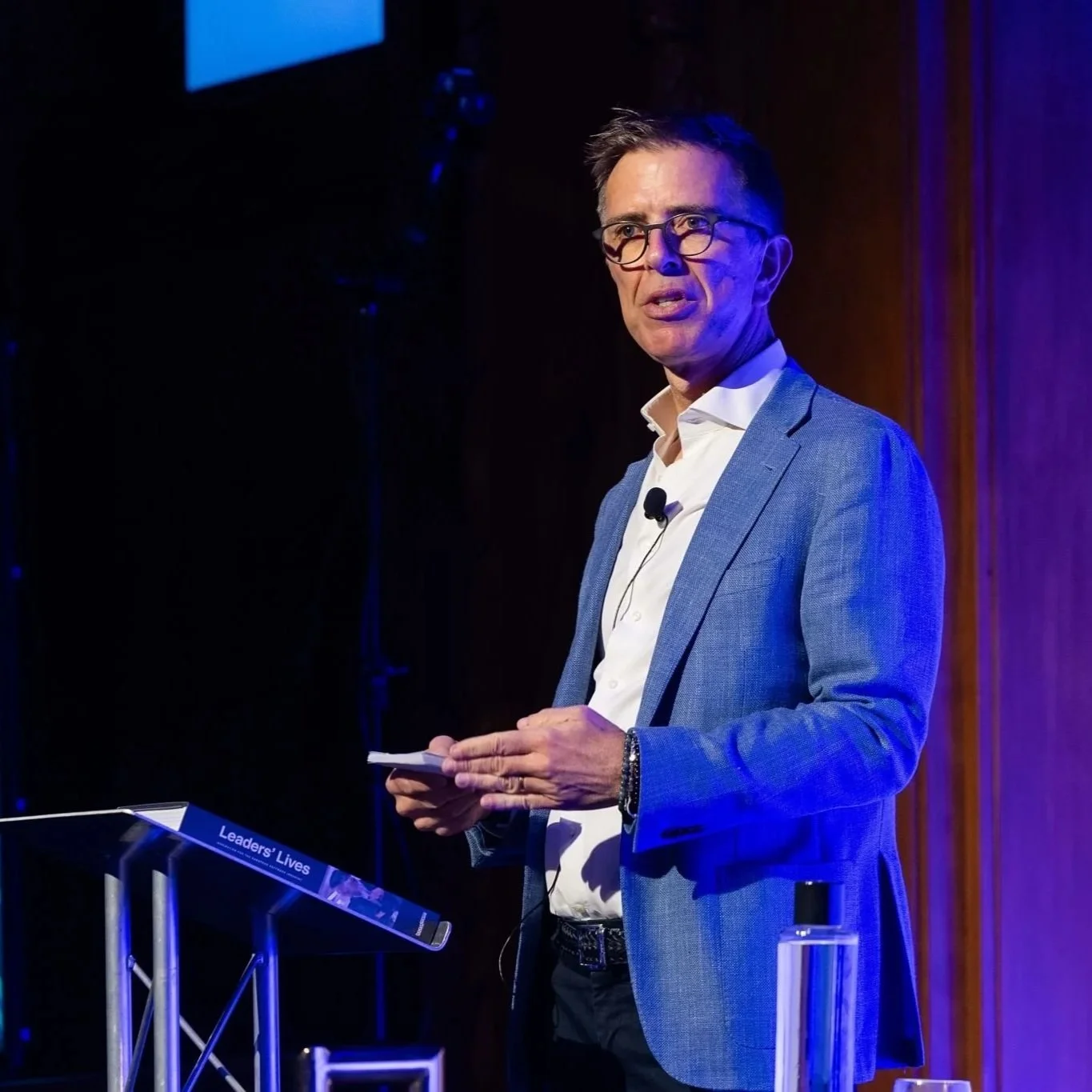
How do you help Europe build tech companies that scale fast enough to compete in an AI-driven world? Phill Robinson, co-founder of Boardwave, shares why he helped create a European community for founders, CEOs, and Chairs — designed to strengthen the leadership infrastructure behind Europe’s software and AI ecosystem. What began as a “small club” idea sketched at a kitchen table has grown into a vibrant, mission-led network of 2,500+ members across the UK, France, Germany, Italy, Spain, the Nordics, and the Netherlands.

But Boardwave isn’t a conference circuit, and it isn’t selling anything. Phill explains why free membership, a high bar for entry, and a social enterprise model have been central to building genuine peer support. Boardwave is designed to help leaders find their “tribe” and share hard-won wisdom across borders, replicating the collaborative flywheel of Silicon Valley.

In this episode, Phill reflects on the systemic reasons behind slower growth in European tech and why the gap is widening between AI-first and non-AI businesses. He argues that the next decade will demand “adaptive leadership,” where experience matters less than the ability to learn quickly, pivot fast, and move in concert with others. And he shares a personal connection that underpins the mission. Boardwave donates any surplus to Parkinson’s research, linking Europe’s tech future to a deeper commitment to impact beyond business.

Supported by Norman Broadbent:  https://www.normanbroadbent.com/
Denise Massey
Breakfast That Changes the System

How do you end child morning hunger in a way that lasts? Lindsey MacDonald, CEO of Magic Breakfast, shares how the charity is helping children start the school day nourished, settled, and ready to learn — while working alongside schools and government as national breakfast provision shifts from voluntary to universal. What began with bagels delivered from a car boot now reaches more than 350,000 children across 1,000+ schools in England and Scotland.

But the “magic” is more than the food. Lindsey explains why breakfast clubs should be stigma-free, welcoming spaces that build belonging and wellbeing, not just fill stomachs. From food delivery and school support to research and advocacy, Magic Breakfast operates across both direct provision and system change, with a growing focus on ensuring every child is nourished, empowered, and thriving.

In this episode, Lindsey reflects on leading through rising demand, food price shocks, and policy change — and on building an organisation that can scale without losing its purpose. From operational innovations like the “Magic Menu” to the charity’s long-term Nourishing Futures strategy, she offers a grounded look at how mission, evidence, and collaboration can reshape opportunity for children at a national level.

Supported by Norman Broadbent:  https://www.normanbroadbent.com/

Lindsey MacDonald

Educating for Human Potential

In this episode of The Purposeful Strategist, Belden Menkus speaks with Marina Stenos, Managing Partner of FINN Partners’ Global Education Practice. Marina has spent her career working at the intersection of education, public affairs, and strategic communications—supporting foundations, school systems, universities, philanthropies, and education organisations as they navigate complexity, reform, and change.

With experience across K–12, higher education, public affairs, and STEM, Marina shares how she and her team support clients navigating complexity, scrutiny, and reform. She explains the essentials to lasting change: protecting the integrity of process, creating space for expert work, and maintaining narrative discipline.

In this episode, Marina reflects on education as a system of trust: how representation and storytelling shape who sees themselves as learners and leaders; why access to learning—across pathways, geographies, and lifetimes—is central to human potential; and how communicators can act as stewards of purpose in an age of noise, misinformation, and AI.

Supported by Norman Broadbent:  https://www.normanbroadbent.com/

Marina Stenos

Ports as the Backbone of a Resilient Economy

How do you future-proof a nation’s trade, energy transition, and regional growth—when much of that future depends on infrastructure most people rarely see? In this episode, Geraint Evans, Chief Executive Officer of UK Major Ports Group, highlights the strategic role of ports at the intersection of infrastructure, trade, and national resilience.

Drawing on his experience as a Special Adviser under three Prime Ministers and later as a Partner at strategic consultancy Stonehaven, Geraint reflects on why ports are often overlooked despite being anchor employers in regional communities and critical enablers of supply chains, investment, and growth.

The conversation explores leadership in complex systems: why strategy is a process rather than an event; how trust, clarity, and pace matter when competitors sit around the same table; and why alignment between government and the private sector so often breaks down—even when both sides use the same language. From floating offshore wind to national security and resilience, Geraint offers a compelling perspective on the choices facing the ports sector today—and how what is decided, or not decided, now will shape the next hundred years.

Supported by Norman Broadbent:  https://www.normanbroadbent.com/

Geraint Evans

Becoming The Most Human Law Firm

How do you lead a modern, full-service law firm to grow while protecting the culture that makes it distinctive? Helen Drayton, CEO of Penningtons Manches Cooper LLP, shares how she’s guiding a 300-year-old firm through a period of focused evolution—anchored by its ambition to become ‘the most human law firm.’

Under Helen’s leadership, Penningtons Manches Cooper has sharpened its strategy around values that emerged from an internal cultural project: clarity, curiosity, growth, and meaningful client impact. With FY25 revenue of £120 million and a growing international footprint, the firm’s strategy is clear: strengthen the foundations—brand, collaboration, innovation—and sustainable commercial results will follow.

In this conversation, Helen reflects on leading with authenticity, being accessible to her people, and building trust through honesty. Her message is simple and compelling: in a changing legal landscape, the firms that thrive will be those that evolve with purpose, while staying unmistakably human.

Supported by Norman Broadbent: https://www.normanbroadbent.com/

Helen Drayton

Creating Beautiful Places

How do you scale a thriving consultancy without losing the creative spirit, intimacy, and care that made it successful in the first place? Douglas McCormick, Chief Executive Officer of Pegasus Group, shares how he is leading one of the UK’s foremost multidisciplinary development consultancies through its next phase of growth — while staying true to a clear purpose: to bring innovative thinking to create beautiful places that enhance people’s lives.

With 600 professionals across 15 offices, Pegasus combines expertise in planning, design, environment, infrastructure and heritage. Douglas explains how the firm has grown sector by sector by asking what sits adjacent to their existing strengths and adds value for clients, all while retaining what has always set Pegasus apart: deep relationships and exceptional people.

In this episode, Douglas reflects on leadership at the intersection of creativity, commerce, and community. He shares how clarity of purpose sets strategic boundaries, enabling Pegasus to decide where to invest and which opportunities to pursue. He talks about creating spaces people love to be in, the importance of listening to frontline teams, and why transformation requires both courage and generosity. His experience offers a compelling view of how organisations can grow with intention — balancing design ambition, commercial discipline, and the very human work of building places that matter.

Supported by Norman Broadbent:  https://www.normanbroadbent.com/

Douglas McCormick

Embracing a Possibilist Mindset

How do you modernise a 50-year-old financial mutual without losing the values that made it matter in the first place? Jim Islam, Chief Executive Officer of OneFamily, shares how he is leading one of the UK’s largest mutual financial organisations through a period of renewal—expanding its relevance, accessibility, and impact while staying true to its founding purpose of inspiring better futures.

Founded in the 1970s with a commitment to inclusion and long-term financial resilience, OneFamily has grown from a small London office into the UK’s largest Child Trust Fund provider, now supporting 1.5 million customers. Jim reflects on how the organisation has reinvented itself—diversifying its products, investing heavily in technology, and redesigning customer journeys—so that long-term savings and protection products remain meaningful and accessible for new generations.

In this episode, Jim explores leadership in purpose-led systems: why mutuals and cooperatives are experiencing a cultural resurgence; how deeply collaborative strategy-building creates genuine buy-in during transformation; and why innovation should start with people, not products. Drawing on his own experience of social mobility and a career spanning start-ups and large institutions, Jim offers a compelling perspective on possibility, trust, and the role financial services can play in building more resilient futures.

Supported by Norman Broadbent:  https://www.normanbroadbent.com/

Jim Islam

Scaling Mobility Without Charity

How do you expand access to elite universities without relying on charity? Joe Seddon, Founder and CEO of Zero Gravity, shares how he’s building a mission-driven technology company that helps talented students from low-income backgrounds reach top universities and careers—by reimagining how social mobility is funded. What began in his childhood bedroom with the final £200 of his student loan has grown into a scaling organisation supporting over 15,000 students into higher education, including more than 1,000 to Oxbridge.

Zero Gravity now employs 25 colleagues, works with more than 40 enterprise partners, and has distributed £2.3 million in scholarships. Rather than viewing other charities as competitors, Joe sees his competition as the major consumer platforms that capture young people’s attention. Through a mobile app that breaks the journey into small, habitual steps, Zero Gravity redirects time from social media toward opportunity.

In this episode, Joe reflects on leadership and purpose: why strategic focus begins with deciding what not to do, how capturing data early enables future breakthroughs, and why organisational growth is not the same as impact. His story offers a fresh view on how technology, incentives, and entrepreneurial discipline can scale opportunity with precision—showing that when purpose meets innovation, the result can change lives at scale.

Supported by Norman Broadbent:  https://www.normanbroadbent.com/

Joe Seddon

©2015 - 2021. Menkus & Associates is registered in England & Wales under company number 03658410.

52 Bovingdon Road, London, SW6 2AP